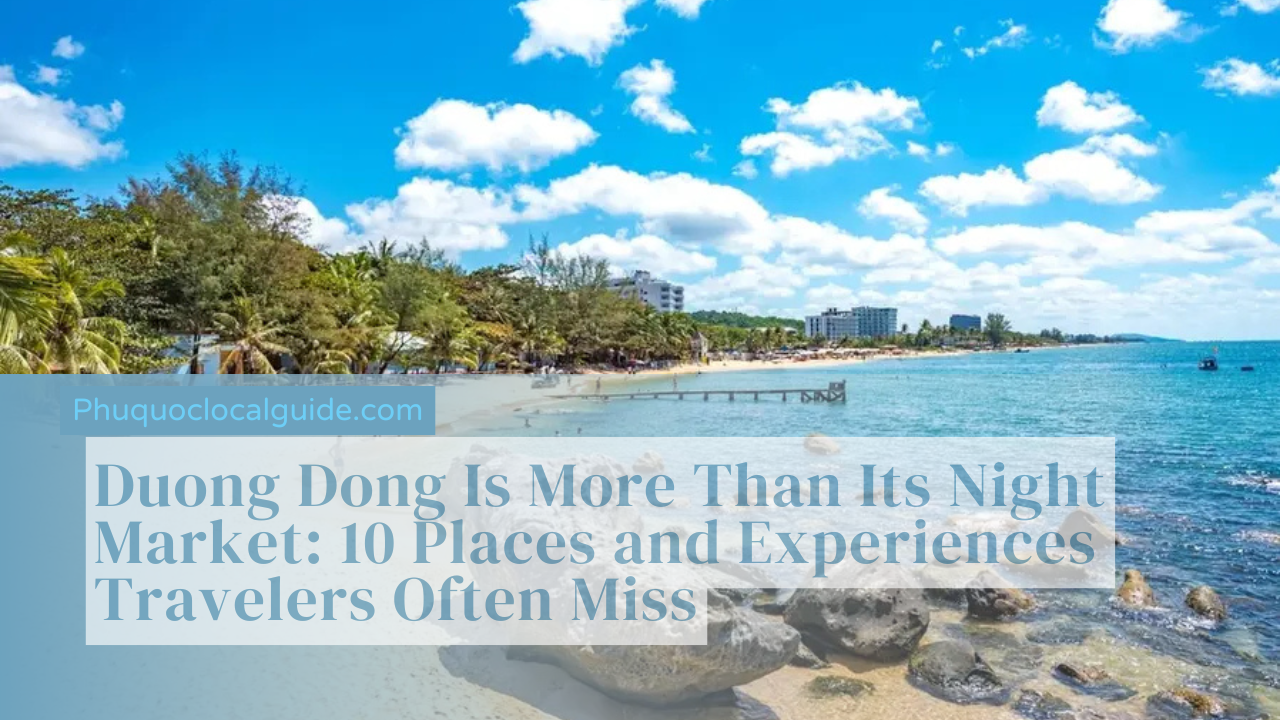
Mention Duong Dong to most travelers, and two places usually come to mind: Phu Quoc Night Market and Dinh Cau. Both are worth visiting. The night market brings together food stalls, souvenirs, desserts, and the energy of central Phu Quoc after dark, while Dinh Cau is one of the island’s best-known cultural landmarks and a beautiful place to watch the sunset. However, seeing only these two places means experiencing only a small part of Duong Dong.
Beyond the busy evening streets is a coastal town shaped by fishing, river trade, family restaurants, spiritual traditions, and one of Phu Quoc’s oldest industries. Duong Dong may not have the dramatic landscapes of northern Phu Quoc or the large entertainment complexes of the south, but its appeal lies in smaller experiences that reveal how people on the island actually live. Here are ten sides of Duong Dong that many visitors overlook.
Read more: Duong Dong – The Heart of Phu Quoc Island
1. The Early-Morning Fish Market
While most visitors are still asleep, the fishing side of Duong Dong is already awake. Between approximately 5:00 AM and 7:00 AM, boats begin returning after a night at sea, engines echo across the river, seafood is carried ashore, and buyers gather around the morning catch. This is not a carefully arranged tourist market but a working part of the local fishing economy.
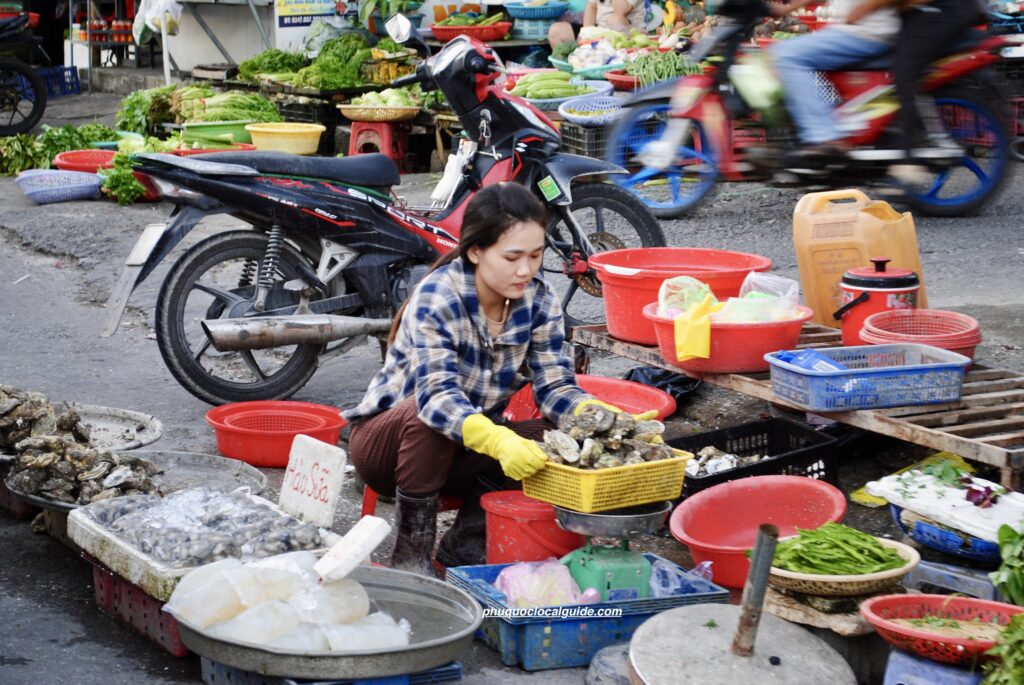
Depending on the season and the day’s catch, you may see fish, squid, crabs, shellfish, or other seafood being sorted and prepared for sale. The scene can feel busy and slightly chaotic, but it offers one of the most authentic glimpses of coastal life in central Phu Quoc. Arrive quietly, remain aware of people working around you, and ask before photographing anyone at close range. Best time to visit: From 5:30 AM to 7:00 AM.
2. Dinh Ba Thuy Long Thanh Mau
Dinh Ba Thuy Long Thanh Mau stands close to the busy center of Duong Dong, yet the atmosphere inside is usually much calmer. The shrine is associated with Thuy Long Thanh Mau, a sacred figure respected by generations of local residents. For people living on an island, spiritual beliefs have always been closely connected to nature, the sea, weather, and the risks of fishing journeys.
Local worshippers still visit Dinh Ba to burn incense and pray for peace, protection, and good fortune. Unlike Dinh Cau, this shrine receives fewer tourists, making it a meaningful place for travelers who want to understand the spiritual life of Phu Quoc beyond its most photographed landmark. Dress respectfully, keep your voice low, and remember that this remains an active place of worship.
3. The Duong Dong River
It is easy to think of the Duong Dong River as little more than a waterway passing through the town, but historically it played a central role in Duong Dong’s development. Before the island had modern roads, the river and its estuary provided access for fishing boats, traders, and communities living along the water. Goods such as dried seafood, pepper, and fish sauce moved through this area before continuing toward mainland ports.
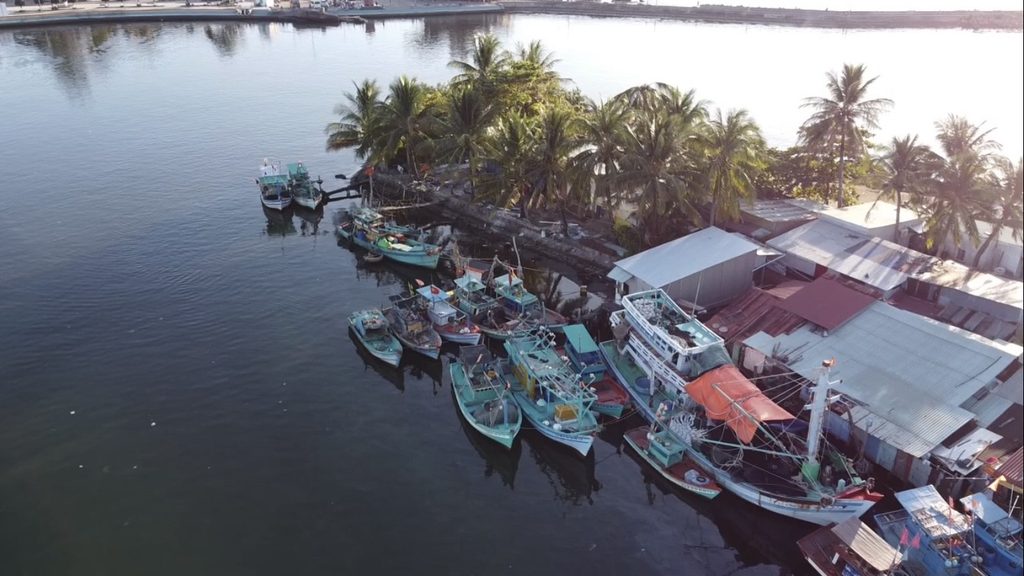
Today, boats still anchor along sections of the river. The scenery is not polished or designed for tourism; you may see fishing equipment, small workshops, working boats, houses, cafés, and the everyday activity of people whose lives remain connected to the water. Sitting beside the river with a coffee in the morning or late afternoon is one of the simplest ways to experience Duong Dong.
4. Bach Dang Park
Bach Dang Park is not a major attraction in the conventional sense. There are no entrance tickets, elaborate activities, or famous installations. Its importance comes from the role it plays in local life. In the morning, residents come here to walk and exercise; later in the day, families bring children to the waterfront, friends gather beneath the trees, and people stop to enjoy the sea breeze.
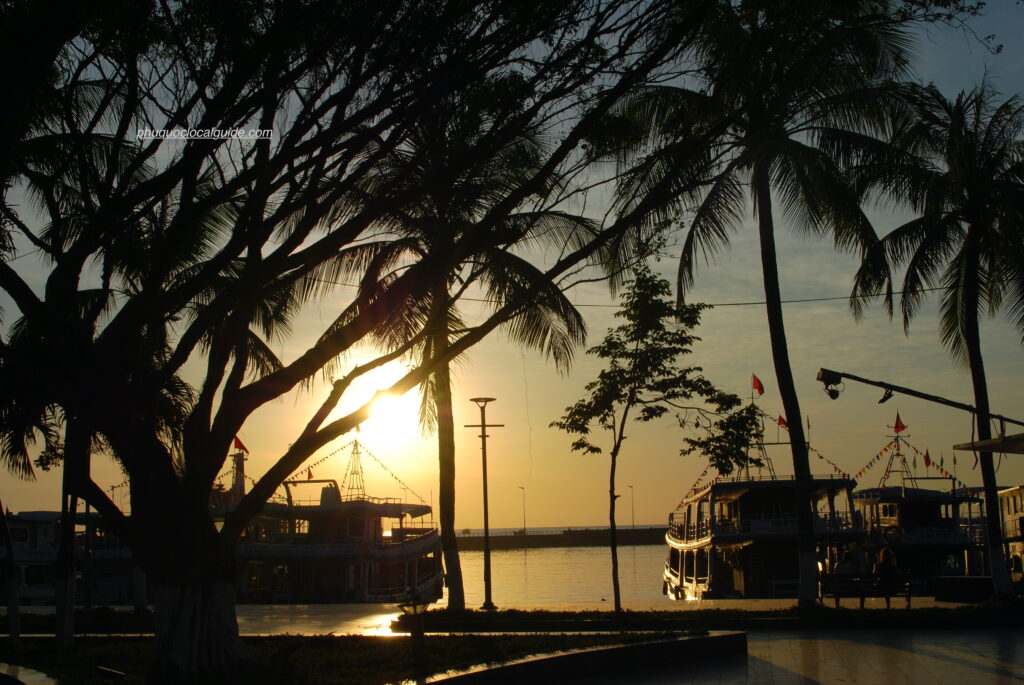
The park also overlooks the river mouth, where fishing boats pass between the harbor and the Gulf of Thailand. For visitors, Bach Dang Park offers a comfortable place to pause between the town center, Dinh Cau, and the nearby markets, while for local residents, it is part of their daily routine. That difference is what makes it worth visiting.
5. The View from Nguyen Trung Truc Bridge
Thousands of people cross Nguyen Trung Truc Bridge without paying much attention to the view, yet it provides one of the clearest perspectives of Duong Dong’s relationship with its river. Look toward the coast and you will see the river opening into the sea near Dinh Cau; turn inland and the water continues through the town, lined with boats and neighborhoods.
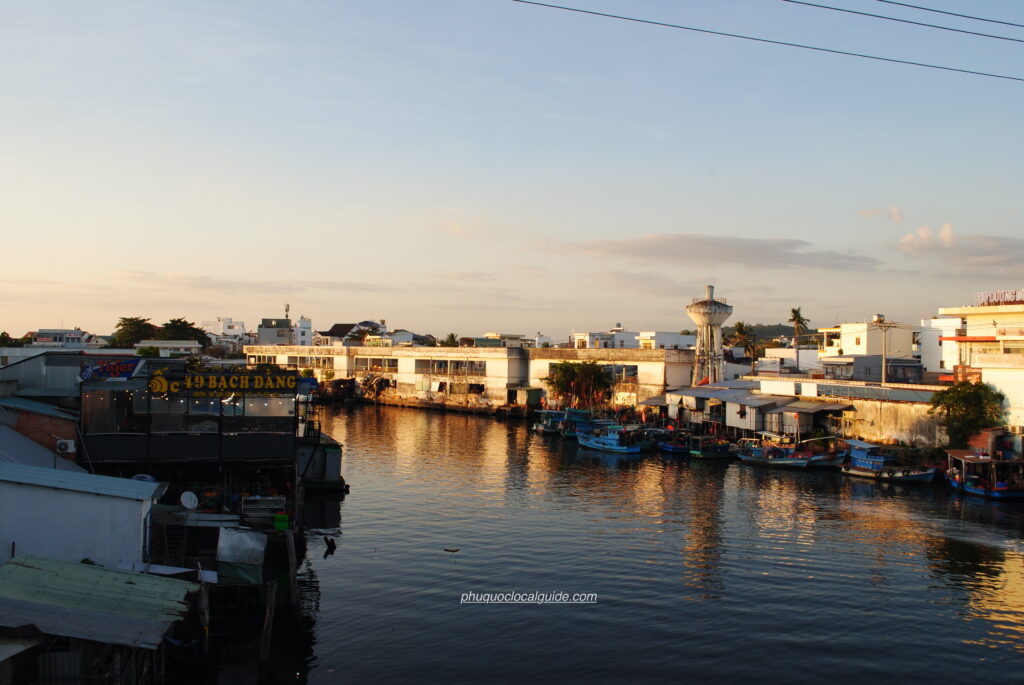
The scenery becomes especially attractive in the late afternoon when softer sunlight reflects across the water. Nguyen Trung Truc Bridge is not a sightseeing platform, so remain cautious and do not obstruct traffic. Even a short pause in a safe position can provide a better understanding of how the river shaped the town around it.
6. The Local Coastline Along Tran Phu Road
Visitors searching for a beach near central Duong Dong usually head toward Long Beach, but the coastline along Tran Phu Road reveals a different side of the town. This is not a resort beach with rows of sun loungers and organized activities; instead, it is closely connected to fishing neighborhoods, local houses, small businesses, and everyday life.
Some sections are peaceful in the late afternoon when the heat begins to fade and the light becomes softer. You may see people walking, fishing boats offshore, or residents sitting near the water to enjoy the breeze. Access and conditions can vary along the road, and not every section is suitable for swimming, so visit for the coastal atmosphere rather than expecting a polished beach experience.
7. Small Seaside and Riverside Cafés
Duong Dong has many modern cafés, but some of the most enjoyable places are the simplest ones. A small café beside the river or near the coast may offer only basic tables, Vietnamese coffee, fresh coconut, and a view of the water, and that is often enough.

Local coffee culture is not always about impressive interiors or elaborate drinks; it is about sitting, talking, watching the road, and allowing time to pass without rushing. Choose a place where you can watch fishing boats, feel the sea breeze, or observe the town around you. A quiet hour in a local café can reveal more about Duong Dong than another hurried stop at a famous attraction.
8. Local Food Along 30 Thang 4 Street
Phu Quoc Night Market is convenient for trying seafood and snacks in one place, but for a broader introduction to local food, explore 30 Thang 4 Street and the surrounding roads. This area contains a mixture of long-established eateries, family restaurants, seafood places, noodle shops, and casual cafés.
Depending on the time of day, you may find:
- Bun quay
- Bun ken
- Banh canh
- Fish noodle soup
- Home-style rice meals
- Seafood
- Vietnamese coffee and local desserts
Many of these restaurants are not designed as tourist experiences; they are simply places where residents have eaten for years. Do not judge a restaurant only by its decoration, as a modest dining room filled with local customers can be a better sign than an elaborate entrance. Trying several small meals is often the most enjoyable way to explore this part of Duong Dong.
9. Sung Hung Pagoda
Surrounded by the activity of central Duong Dong, Sung Hung Pagoda offers a quieter and more reflective atmosphere. It is one of the town’s long-established religious sites and remains part of the spiritual life of the local community. People visit to worship, pray, and find a moment of calm away from the streets outside.
The pagoda also provides another perspective on Duong Dong’s cultural diversity. The town’s identity has never been shaped by fishing and commerce alone; religious spaces, family traditions, and community beliefs have also played an important role. When visiting, dress appropriately and avoid speaking loudly, and remember that photography should never interrupt people who have come to worship.
10. Traditional Phu Quoc Fish Sauce Houses
Fish sauce is not simply a souvenir from Phu Quoc; it is part of the island’s economic and cultural history. Traditional producers ferment salted anchovies inside large wooden barrels for an extended period, a process that requires knowledge, patience, and careful control developed through generations of experience.
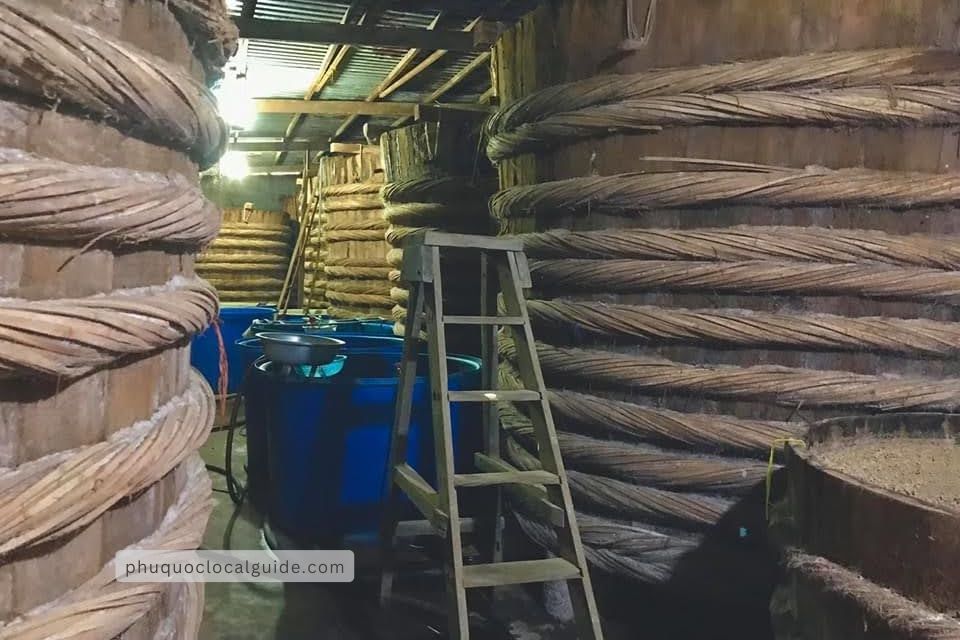
Several fish sauce businesses have historically operated in and around Duong Dong, close to the river and former trading routes. Visiting a traditional fish sauce house can help explain why Phu Quoc fish sauce became so closely associated with the island. The experience is highly sensory: the aroma can be strong, and the production space may feel very different from a modern factory, with large wooden barrels dominating the interior. Not every production house accepts walk-in visitors, so check access before arriving and respect any restrictions inside working areas.
Is Duong Dong Worth Visiting During the Day?
Yes, especially for travelers interested in food, culture, fishing life, and the everyday character of Phu Quoc. The night market is only one expression of Duong Dong. During the day, the town reveals a working harbor, traditional businesses, religious sites, neighborhood cafés, local restaurants, and public spaces where residents spend their time.
You will not find one enormous attraction that defines the entire experience; instead, Duong Dong rewards curiosity. Wake up early enough to see the boats return, step away from the busiest streets, visit a shrine that is not crowded with tour groups, and sit beside the river with a coffee without checking the time. These experiences may appear ordinary, but together they offer a more complete understanding of Phu Quoc.
How Much Time Should You Spend in Duong Dong?
Many travelers visit the center only after sunset and leave once the night market closes, but a half-day is enough to discover another side of the town. Start in the morning with the fish market and local breakfast, visit a cultural or religious site, explore the river area, and have lunch along 30 Thang 4 Street.
Alternatively, spend a late afternoon near Tran Phu, Bach Dang Park, and the Duong Dong River before continuing to Dinh Cau at sunset. Travelers staying nearby can divide these experiences across several days rather than trying to complete a checklist. Duong Dong is more enjoyable when explored gradually.
Look Beyond the Famous Attractions
Duong Dong cannot compete with Sunset Town for dramatic architecture, nor does it offer the remote landscapes found around Bai Thom or the entertainment scale of Grand World. But comparison misses the point. Duong Dong is where much of Phu Quoc’s daily life continues to unfold.
Its markets open before sunrise, fishing boats still return through the river mouth, families eat at familiar restaurants, worship at neighborhood shrines, and meet in public spaces at the end of the day. The town may feel ordinary at first, but stay a little longer and that ordinary quality becomes its greatest strength. Phu Quoc Night Market is worth an evening, but Duong Dong deserves far more than that.
Leave a Reply