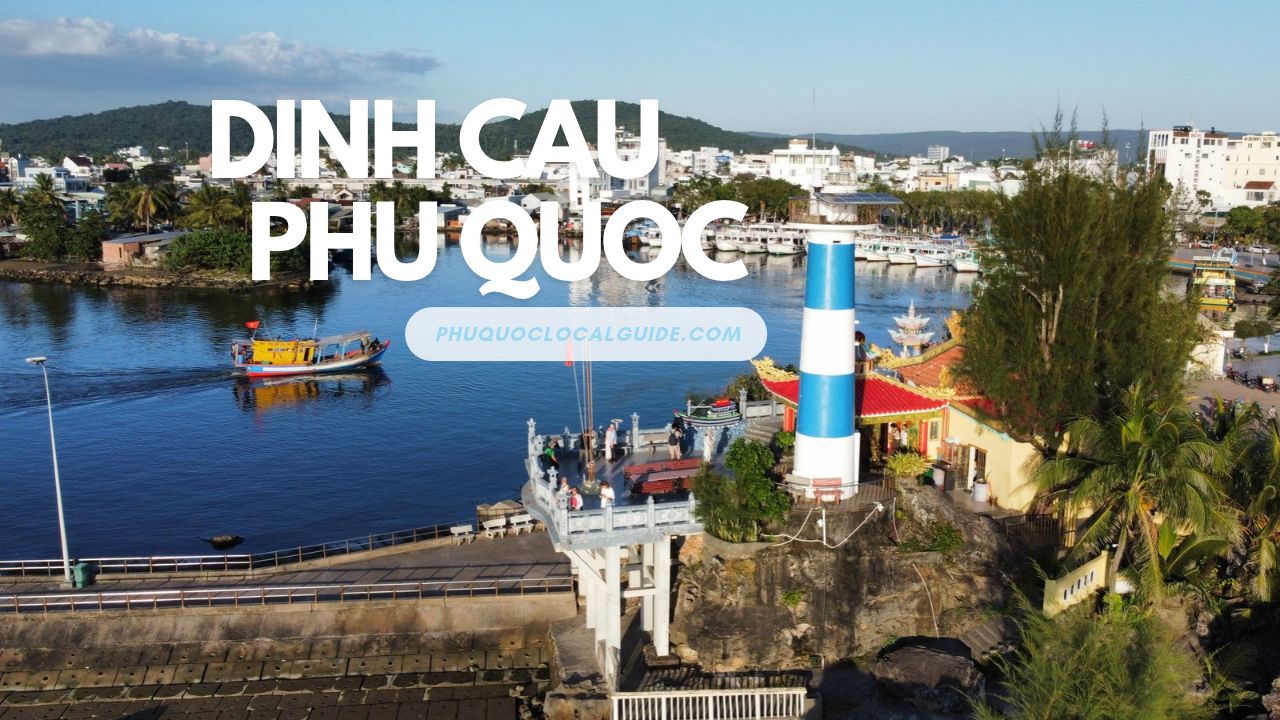
Dinh Cau is one of the most recognizable landmarks in Phu Quoc. The small shrine stands on a rocky headland at the mouth of the Duong Dong River, with the busy town center behind it and the open sea stretching toward the western horizon in front.
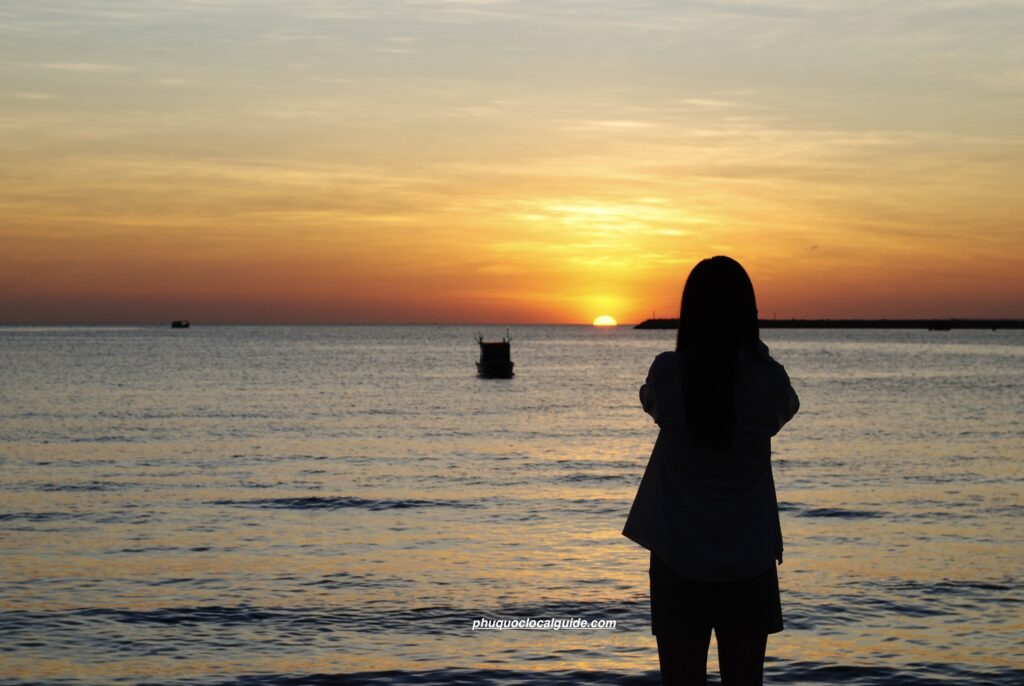
Every evening, visitors gather on the steps and along the waterfront to watch the sun sink into the Gulf of Thailand. Cameras come out, fishing boats move slowly across the glowing water, and the night market begins to come alive only a few streets away. For many travelers, that is the entire story of Dinh Cau—a beautiful sunset spot.
For people who grew up in Duong Dong, however, Dinh Cau means much more. It has long been connected to the sea, the fishing community, the entrance to the river, and the memories of generations of island residents. Before modern roads, airports, resorts, and large tourism developments appeared. This small shrine was already watching over boats leaving and returning to Phu Quoc. Dinh Cau is not simply a place to visit. It is part of how the people of Phu Quoc understand the island.
Why Almost Everyone Visits Dinh Cau
Dinh Cau is easy to reach, free to enter, and located beside several of Duong Dong’s most popular attractions. From the shrine, travelers can walk to Bach Dang Park, Duong Dong Night Market, the riverside, and several local restaurants within minutes.
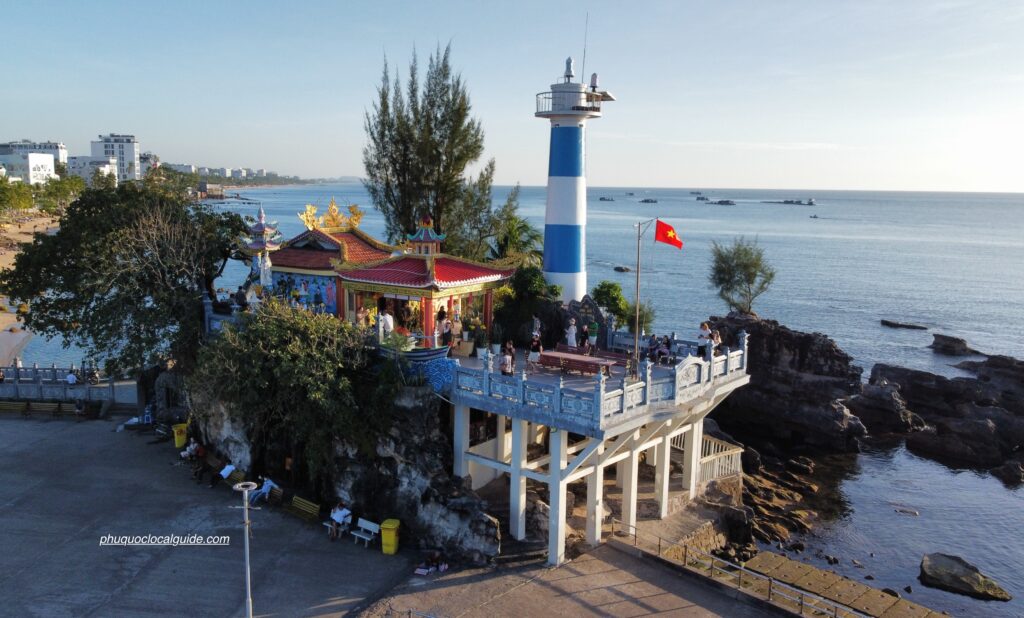
The scenery is immediately impressive. The temple sits on a natural rock formation surrounded by waves, fishing boats, trees, and open sky, with a short staircase leading to a small terrace overlooking the sea. At sunset, the entire area becomes one of the most atmospheric places in central Phu Quoc.
Yet Dinh Cau is popular for another reason. It represents something that many modern attractions cannot reproduce: a direct connection between the landscape, local beliefs, and everyday island life.
The Most Recognizable Landmark in Phu Quoc
If someone asks local residents to name a symbol of Phu Quoc, many will mention Dinh Cau. The shrine has appeared in postcards, tourism advertisements, family photographs, and travel videos for decades. Its image is simple but memorable: a modest temple rising from a dark rock, framed by the sea and the evening sky.
Unlike a modern attraction built specifically for tourism, Dinh Cau developed naturally from the history of the town. Its location was never accidental. The shrine stands at the exact point where the Duong Dong River meets the sea, once one of the most important entrances to the island’s main settlement.
Fishing boats passed the shrine when leaving the river and again when returning home. For generations of fishermen, seeing Dinh Cau from the water meant that Duong Dong was near and that a long journey was almost over.
Why Fishermen Have Worshipped Here for Generations
Life at sea was once far more uncertain than it is today. Fishermen had no satellite weather forecasts, GPS navigation, modern communication systems, or powerful engines. Small wooden boats could spend days offshore, facing changing winds, sudden storms, strong currents, and dangerous waves.

Before leaving, many fishermen stopped at Dinh Cau to light incense. They did not necessarily pray for wealth; what mattered most was much simpler: calm seas, safe winds, a successful trip, and the safe return of everyone on board.
Families also visited the shrine when a new boat was completed, before the first fishing trip of the year, or after a particularly successful catch. These rituals offered reassurance in a life shaped by uncertainty. Faith did not remove the dangers of the sea, but it helped people face them, and that relationship between belief and survival is one of the most important reasons Dinh Cau became sacred to local residents.
A Brief History of Dinh Cau
The exact beginning of Dinh Cau is difficult to document. Local stories suggest that a shrine has existed on the rock for several centuries, possibly connected to early settlers from central Vietnam who established fishing communities on Phu Quoc.
According to oral tradition, boats were sometimes pushed toward the rocky headland during storms, and fishermen who survived believed the location was protected by spiritual forces. A small shrine was then built on the rock, and at one time it was associated with the Dragon King, a powerful figure linked to water and the sea in Vietnamese folk belief.
Over time, local people began calling it Dinh Cau. Like many old places of worship in Vietnam, the shrine has been repaired and rebuilt several times. The current structure reflects both its religious function and its role as a landmark in central Duong Dong. Its cultural importance, however, does not depend on the precise date of construction but on rituals, family memories, fishing traditions, and stories passed from one generation to another.
The Shrine on the Sacred Rock
Dinh Cau is much smaller than many visitors expect. It is not a large temple complex, and there are no monumental courtyards or grand ceremonial halls.
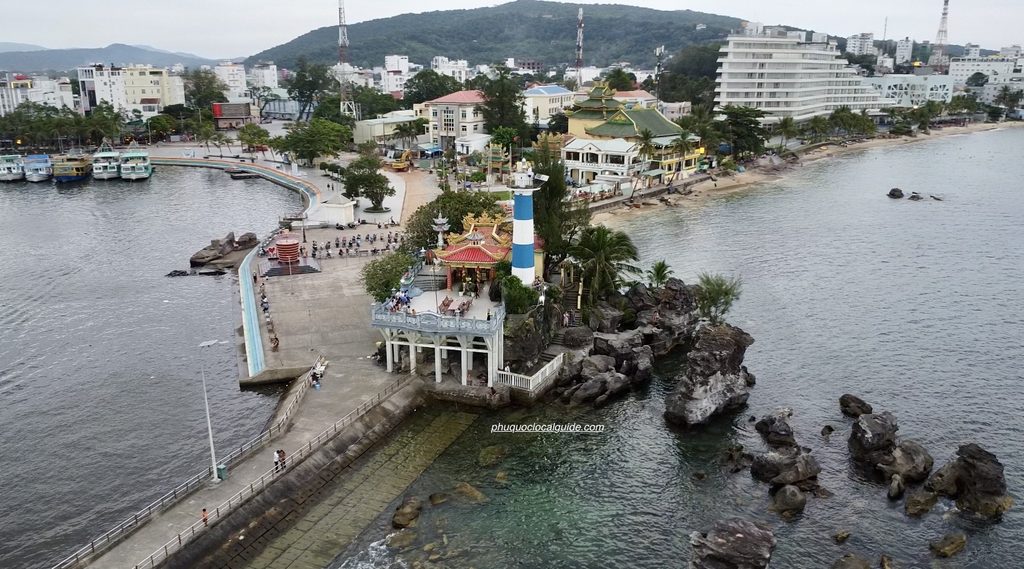
The experience begins with the rock itself. Tree roots twist around the stone, waves break below the walls, and the staircase rises above the shoreline. From the top, visitors can see the river, harbor, fishing boats, park, town, and open sea.
Inside, the worship space is compact and filled with incense. The small scale makes Dinh Cau feel closely connected to the surrounding landscape. The shrine does not dominate the rock; it seems to grow from it, which helps explain why it feels so different from larger religious buildings elsewhere on the island.
Who Are Cau Tai and Cau Quy?
Inside Dinh Cau, visitors may see references to Chua Ngoc Nuong Nuong and two protective figures known as Cau Tai and Cau Quy. For many foreign travelers, these names are unfamiliar.
In local folk belief, the two “Cau” are regarded as spiritual protectors associated with safety, prosperity, and good fortune, often described as the sons or attendants of a mother goddess. Some interpretations connect this belief to traditions from central Vietnam, while others point to the influence of Cham culture and the worship of the goddess Thiên Y A Na.
There are also different stories linking the shrine to historical figures and events, and no single version is universally accepted. This is normal for folk religion, where beliefs develop through migration, memory, regional traditions, and centuries of storytelling. For many fishermen, the exact origin of Cau Tai and Cau Quy was less important than the protection they represented, and lighting incense before a voyage gave people a sense of peace.
The Legends Behind Dinh Cau
Few places in Phu Quoc are surrounded by as many stories as Dinh Cau. One legend tells of fishermen caught in dangerous weather who were carried toward the rocky headland and survived, later building a shrine in gratitude. Another connects the site to the Dragon King, while other versions focus on Chua Ngoc Nuong Nuong, Cau Tai, and Cau Quy.
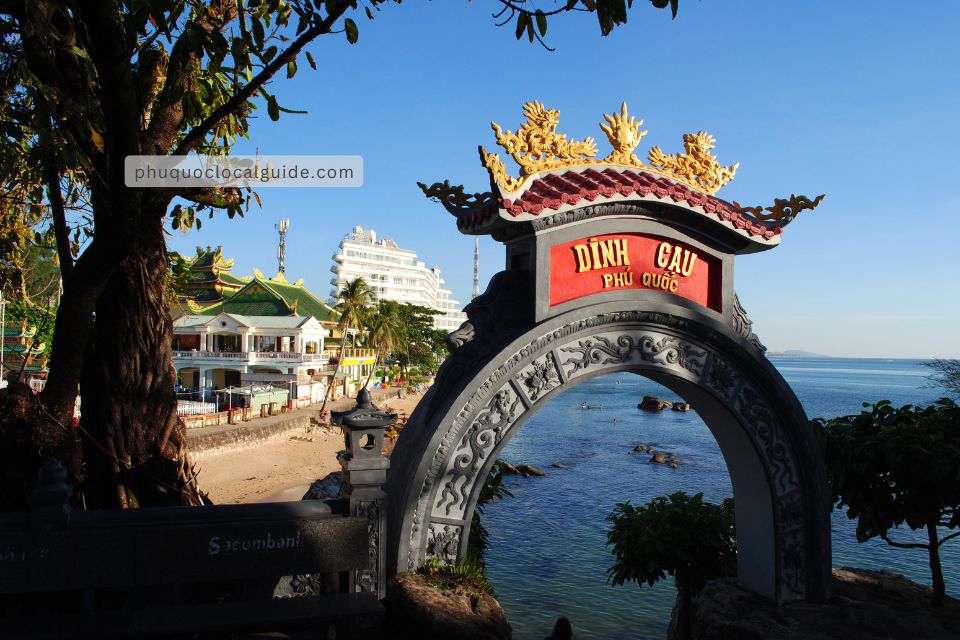
Some accounts suggest influences from Cham spiritual culture, while others mention stories connected to Emperor Gia Long during periods when he sought refuge along the southern coast. These legends do not always agree and were passed down orally, often changing slightly with each storyteller.
It is useful to distinguish folklore from documented history. Legends are not exact records of the past, but they reveal how local people understood danger, nature, protection, and the sea, as well as how different beliefs gradually formed a unique spiritual tradition on the island.
The Mysterious Man Who Lived Beneath Dinh Cau
One of the strangest stories connected to Dinh Cau concerns a mysterious man who may have lived inside a small sea cave below the shrine. According to older residents, he appeared in Duong Dong in the early twentieth century, spoke little, and lived quietly near the shrine.
Some believed he was a fisherman, while others thought he was a hermit seeking solitude. The rocky base beneath Dinh Cau contains small natural cavities shaped by waves and erosion, and local stories claim he eventually moved into one of these spaces.
Residents occasionally left vegetarian food and water near the entrance. Sometimes the food remained untouched; other times it disappeared without anyone seeing him. Some versions say he blocked part of the cave entrance with rocks and lived in isolation, while others describe him as having a remarkable ability to predict the weather by observing clouds, wind, and sea conditions.
Later stories portray him as a caretaker of Dinh Cau, though his real name, origins, and final resting place have been forgotten. There is no strong historical documentation confirming the story, and like many legends associated with Dinh Cau, its mystery is part of its appeal.
Why Sunset Feels Different at Dinh Cau
There are many places to watch the sunset in Phu Quoc, including resort beaches, rooftop bars, and waterfront cafés. Dinh Cau feels different because the sunset is only one part of the scene.
Around 5:00 or 5:30 PM, the light softens over the sea. Fishing boats rest near the river mouth, squid-fishing vessels prepare for their evening trips, local residents walk through Bach Dang Park, worshippers climb the stairs to light incense, and travelers gather along the rocks waiting for the sun to descend.
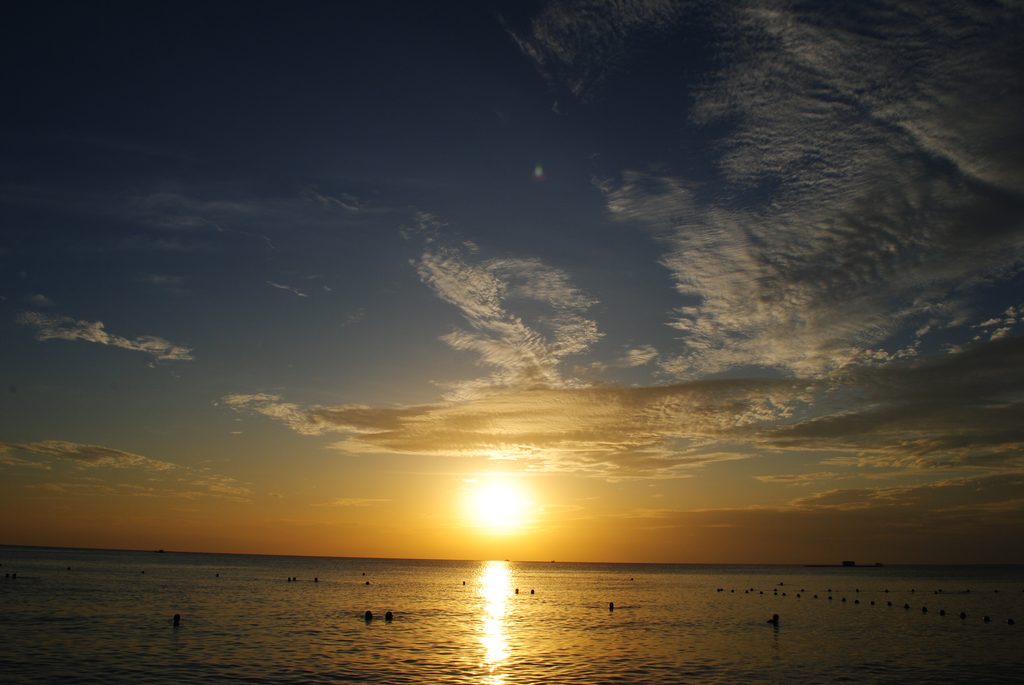
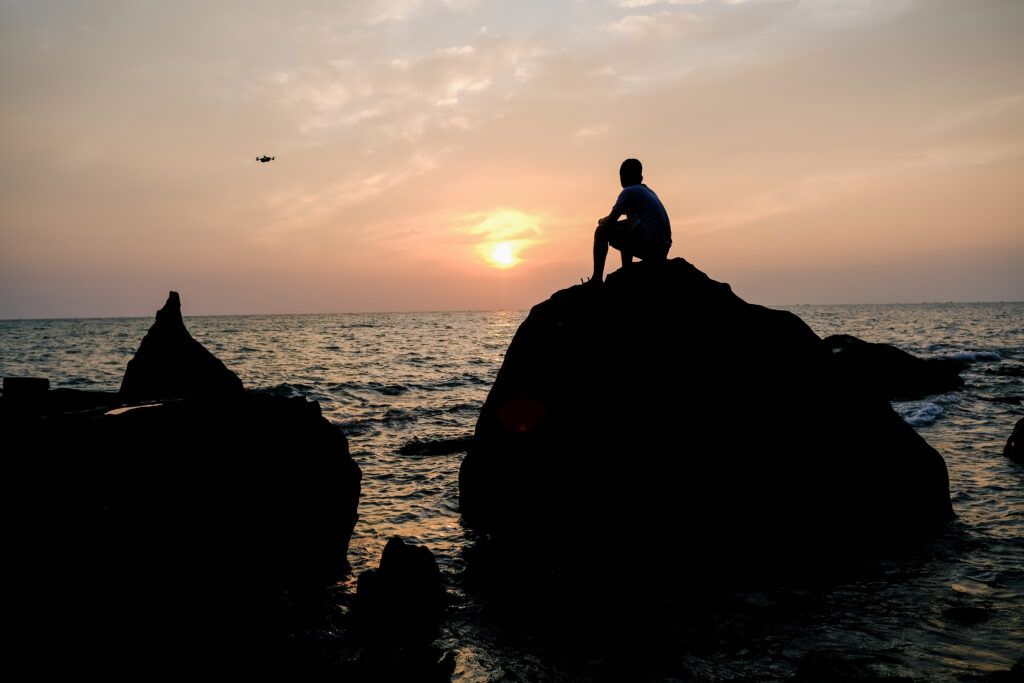
The view contains many layers of Duong Dong at once: the sea, the river, the working fishing harbor, the shrine, the modern town, and the daily routines of people who live here. After sunset, lamps around the shrine begin to glow, the night market becomes busier, and the sounds of engines, waves, and occasional temple bells fill the air. This is not a silent or isolated sunset—it is a living one.
The Best Time to Visit Dinh Cau
Most visitors come in the late afternoon, and arriving between 5:00 and 5:30 PM usually gives enough time to explore before sunset. This is also the busiest period, especially during weekends and peak travel seasons.
For photography, the best views often appear before the sun reaches the horizon, when boats and clouds catch the warm light and the shrine begins to appear in silhouette. However, sunset is not the only good time to visit.
Early Morning
Between about 5:30 and 7:00 AM, Dinh Cau feels completely different. There are fewer travelers, older residents exercise in the park, fishing boats return from the sea, and small cafés begin serving coffee. The first sunlight touches the rocks and tree roots, and the smells of saltwater, fresh fish, and nearby markets fill the air. This is the quieter, more authentic side of Dinh Cau.
Late Evening
After the sunset crowds leave, the area becomes calmer again. The shrine is illuminated, fishing boats move through the dark water, and the town glows behind the river, making it a pleasant time for a slow walk before visiting the night market.
The View Most Visitors Forget to See
Nearly everyone stands at Dinh Cau and looks west toward the sea, but the view inland is just as meaningful. Turning around reveals the Nguyen Trung Truc Bridge, the Duong Dong River, moored fishing vessels, Bach Dang Park, and the town along the waterfront.
From this angle, Dinh Cau stands at the meeting point of several worlds: between the river and the sea, the fishing village and the modern town, spiritual belief and everyday work, and old Phu Quoc and the island of today. Its location explains much of its importance, as it has always been part of the community rather than separate from it.
How Dinh Cau and Duong Dong Have Changed
Old photographs of Duong Dong show a very different waterfront, with fewer buildings, no modern night market, and wooden fishing boats crowding the river entrance. At night, the area was darker and quieter.
Modern Duong Dong has changed rapidly, with restaurants, cafés, hotels, and tourism services surrounding the old center. Yet some familiar scenes remain: fishing boats still return near sunset, nets are still repaired along the water, engines still echo from the harbor, and families still light incense inside the shrine. Dinh Cau has become a major attraction but continues to serve as both a tourism landmark and an active spiritual place.
What to See Around Dinh Cau
Dinh Cau is located in one of the easiest parts of Phu Quoc to explore on foot, and several nearby places can be combined into a short cultural walk:
- Bach Dang Park: A waterfront park beside the shrine, popular with locals for walking, relaxing, and watching boats.
- Phu Quoc Night Market: A lively area offering seafood, snacks, souvenirs, and desserts, just a short walk away.
- Duong Dong Market: A daytime market with fish, seafood, vegetables, and local goods, busiest in the morning.
- Dinh Ba Thuy Long Thanh Mau: A folk shrine connected to coastal spiritual traditions.
- Sung Hung Pagoda: One of the oldest Buddhist temples in Phu Quoc, known for its peaceful atmosphere.
- Nguyen Trung Truc Bridge: A good viewpoint over the river and older waterfront neighborhoods.
A Suggested Walking Route Through Old Duong Dong
A simple self-guided route can begin at Bach Dang Park, followed by a visit to Dinh Cau before the busiest sunset period. Continue toward Sung Hung Pagoda and explore the streets around central Duong Dong, then visit Duong Dong Market or walk near Nguyen Trung Truc Bridge.
Return to Dinh Cau before sunset, and after dark, finish the walk at the night market or enjoy a local meal such as bun quay, fish noodle soup, or banh canh. This short route reveals several sides of Duong Dong, including its fishing history, religious traditions, markets, waterfront life, and transformation into the island’s busiest town.
Tips for Visiting Dinh Cau
Dinh Cau remains an active place of worship, so visitors should behave respectfully. Wear appropriate clothing, speak quietly inside, avoid blocking worshippers, and do not touch altars or religious objects. Ask permission before photographing people during prayers.
The staircase and rocks may become slippery after rain or sea spray, so wear stable footwear and take care near the edges. Sunset can be crowded, so keep personal belongings secure. Spending more time walking around the park or river often makes the visit more meaningful.
Frequently Asked Questions About Dinh Cau
- Is Dinh Cau a temple or a shrine? Dinh Cau is generally described as a folk shrine connected to local coastal beliefs and protective deities.
- Is Dinh Cau free to visit? Yes, there is normally no entrance fee.
- How long should I spend there? A quick visit may take 20 to 30 minutes, while a more complete experience with the park and sunset can take one to two hours.
- What is the best time to visit? Late afternoon is best for sunset, while early morning offers a quieter atmosphere.
- Can visitors enter during prayers? Yes, but they should remain quiet and respectful.
- Is Dinh Cau suitable for children? Yes, but adults should supervise children carefully around stairs and the waterfront.
- Is it close to the night market? Yes, it is within easy walking distance.
- Who are Cau Tai and Cau Quy? They are protective spiritual figures worshipped at Dinh Cau, with different interpretations of their origins.
Dinh Cau Is Not Only a Tourist Attraction
For travelers, Dinh Cau may begin as a place to watch the sunset, but for local people, it carries a much deeper meaning. It is a landmark that fishermen look for when returning home, a shrine where families have prayed for safety, and a place filled with stories and memories passed through generations.
Phu Quoc will continue to change, with new hotels, modern attractions, and a busier waterfront. Yet every evening, as the sun lowers over the sea and fishing boats begin another journey, Dinh Cau remains on its rock at the entrance to the river—quietly watching the ocean, Duong Dong, and the island grow.
Leave a Reply