A Peaceful Temple Hidden in the Heart of Duong Dong
Most travelers exploring Duong Dong spend their time at the night market, Dinh Cau, or the waterfront seafood restaurants. Yet only a few streets away stands one of the island’s most fascinating religious buildings—a place that many visitors pass without ever stepping inside.
The Duong Dong Cao Dai Temple isn’t famous for panoramic views or spectacular sunsets. Instead, it offers something entirely different: a glimpse into one of Vietnam’s most unique religions and a chance to experience a quieter side of Phu Quoc. Hidden among ordinary neighborhood streets, the temple surprises visitors with its colorful facade, peaceful interior, and rich symbolism.
Where Is Duong Dong Cao Dai Temple?
The temple is located on Nguyen Trai Street, close to the Duong Dong River and only a few minutes from Bach Dang Park, Duong Dong Market, and Dinh Cau.
Its central location makes it an easy stop while exploring the old town on foot or by scooter. Unlike many attractions that focus on beaches or entertainment, this is a place where visitors can better understand the cultural diversity that has shaped modern Phu Quoc.
Many people walk right past it without realizing that one of the island’s most distinctive religious sites is hidden just beyond the entrance gate.
How Did Cao Dai Arrive on Phu Quoc?
Cao Dai first reached Phu Quoc through waves of settlers who migrated from mainland Vietnam during the twentieth century. As the island’s Cao Dai community grew, local followers established a temple where they could gather for worship, celebrate important religious festivals, and preserve their traditions.
Today, the temple remains an active place of worship rather than simply a historical monument. Regular ceremonies continue to bring together generations of local families, making it an important part of Duong Dong’s spiritual life. Its presence also reflects the cultural diversity of Phu Quoc, where Buddhism, folk beliefs, Christianity, and Cao Dai have coexisted peacefully for decades.
The First Thing You’ll Notice Is the Architecture
Even before entering the temple, the building immediately catches your attention. Twin towers rise above the entrance, painted in soft shades of yellow, blue, and pink that have become iconic features of Cao Dai architecture throughout Vietnam.
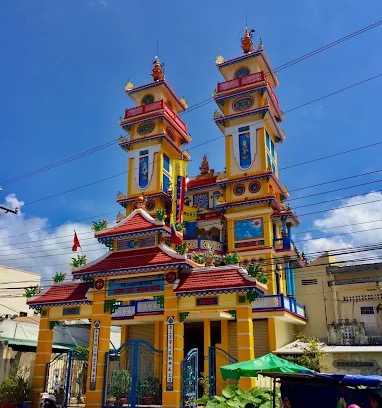
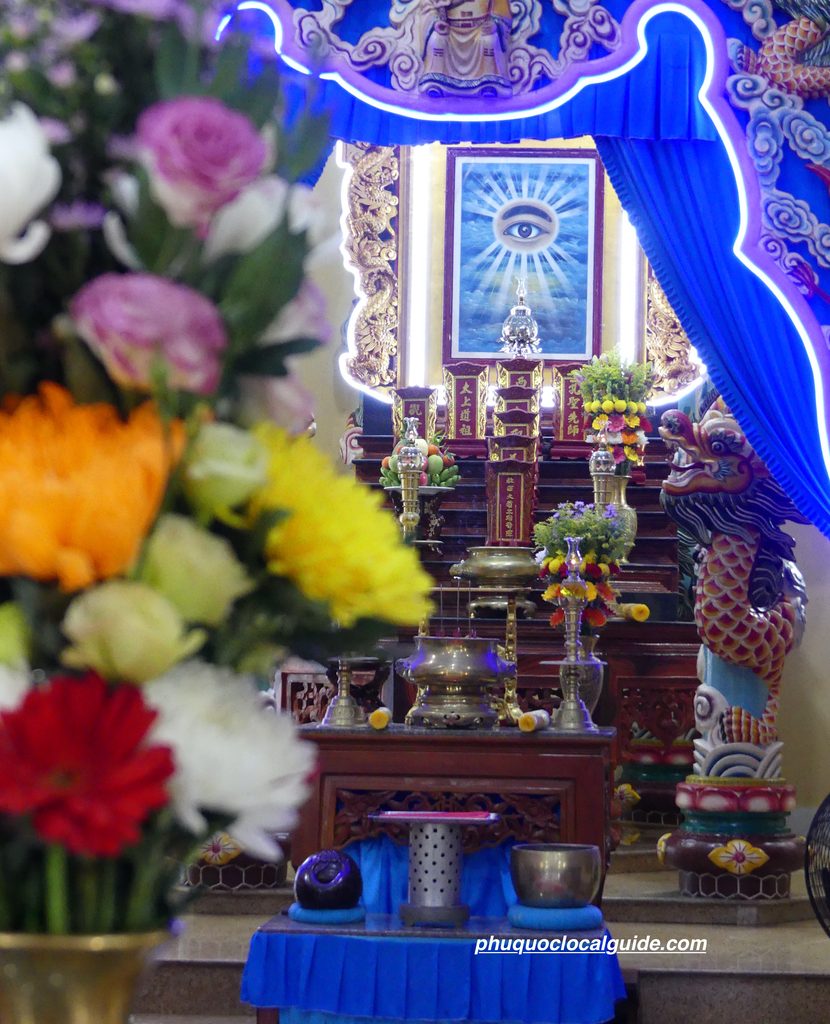
At the center sits the Divine Eye, perhaps the most recognizable symbol of the Cao Dai faith. It represents the presence and guidance of the Supreme Being, reminding followers that every action is seen with wisdom and compassion.
Unlike the darker tones often found in traditional temples, Cao Dai architecture feels bright, open, and almost joyful.
Step Inside and Everything Becomes Quiet
Walking through the entrance feels like stepping into another world. Outside, scooters weave through busy streets and cafés buzz with conversation. Inside, the atmosphere is calm and almost meditative.
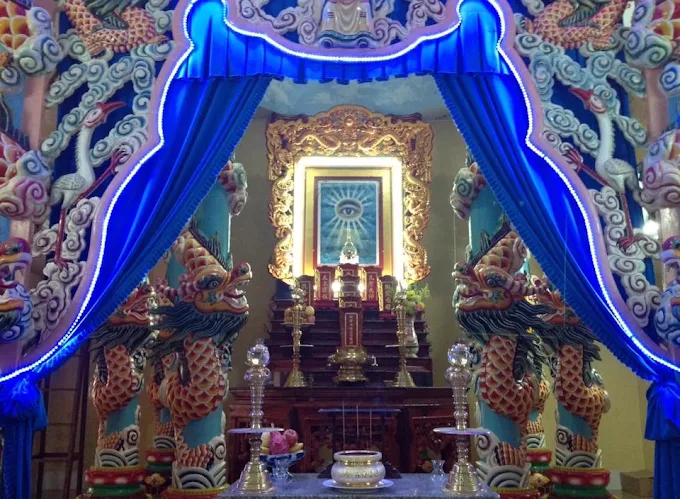
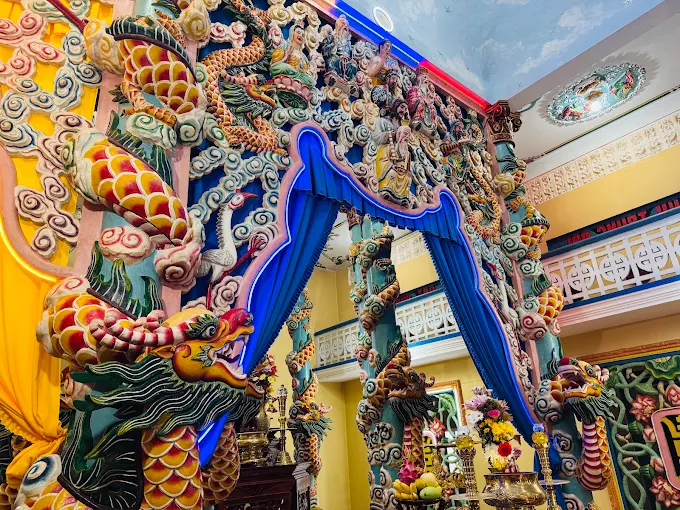
Rows of pastel-colored columns stretch toward the main altar, while natural light filters gently into the prayer hall. The carefully arranged altar, symmetrical design, and peaceful surroundings create a space that encourages quiet reflection. Even visitors with little interest in religion often find themselves lingering longer than expected.
Small Details Worth Looking For
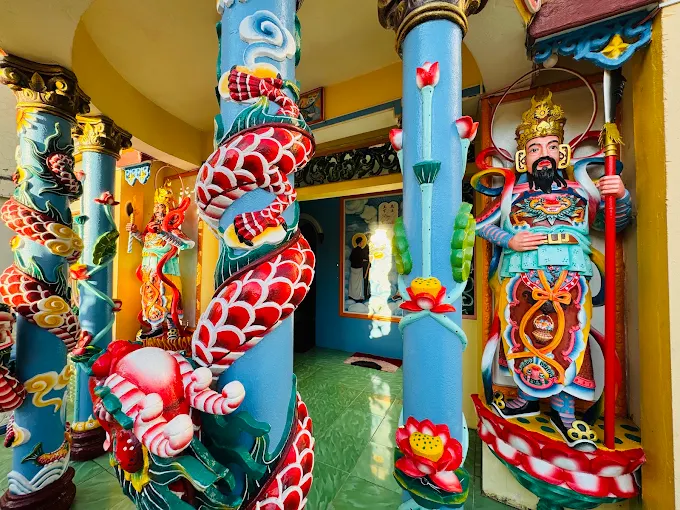
One of the pleasures of visiting the temple is discovering the countless decorative details. Dragons, clouds, lotus flowers, and other symbolic motifs appear throughout the walls and ceilings. Many represent harmony between heaven and earth, while others symbolize wisdom, purity, or spiritual protection.
The Divine Eye appears repeatedly throughout the building, reminding visitors of one of the central beliefs of Cao Dai—that humanity is continually guided toward truth, compassion, and moral living. The more closely you look, the more layers of meaning begin to reveal themselves.
What Makes Cao Dai Different?
For many international visitors, Cao Dai is unlike any religion they’ve encountered before. Officially known as Đại Đạo Tam Kỳ Phổ Độ (“The Great Way of the Third Universal Salvation”), the religion was founded in southern Vietnam during the 1920s.
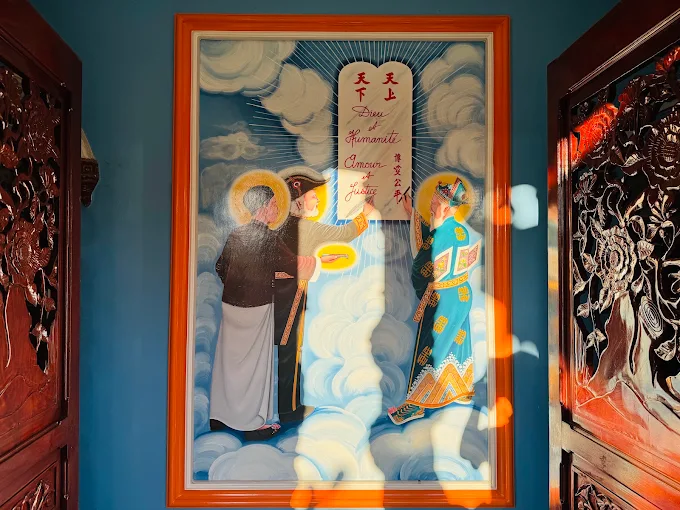
Rather than following a single tradition, Cao Dai brings together teachings from several major philosophies and religions. Its spiritual foundations include:
- Buddhism, with its emphasis on compassion and enlightenment.
- Confucianism, focusing on morality, family, and social harmony.
- Taoism, encouraging balance with nature and the universe.
- Elements of Christianity and other world religions that emphasize universal love and ethical living.
This remarkable blend makes Cao Dai one of the world’s few religions that originated entirely in Vietnam.
Why Are Famous Historical Figures Honored?
One question many foreign visitors ask is why they see famous historical figures represented within Cao Dai teachings. The answer lies in the religion’s philosophy of universal harmony. Rather than separating cultures and beliefs, Cao Dai recognizes spiritual wisdom wherever it appears. As a result, respected figures from different civilizations are honored together.
Among those recognized are:
- Buddha Shakyamuni
- Confucius
- Lao Tzu
- Jesus Christ
- Victor Hugo
To many first-time visitors, this combination feels surprising. Yet it beautifully reflects Cao Dai’s belief that humanity shares common spiritual values despite differences in culture, geography, or religion.
Visiting During Prayer Ceremonies
The temple becomes especially beautiful during worship services. Followers dressed in traditional white robes gather quietly as prayers, chanting, and ceremonial music fill the hall. The atmosphere is both solemn and deeply peaceful. Traditional prayer sessions are generally held four times each day: 6:00 AM, 12:00 PM, 6:00 PM, 12:00 AM
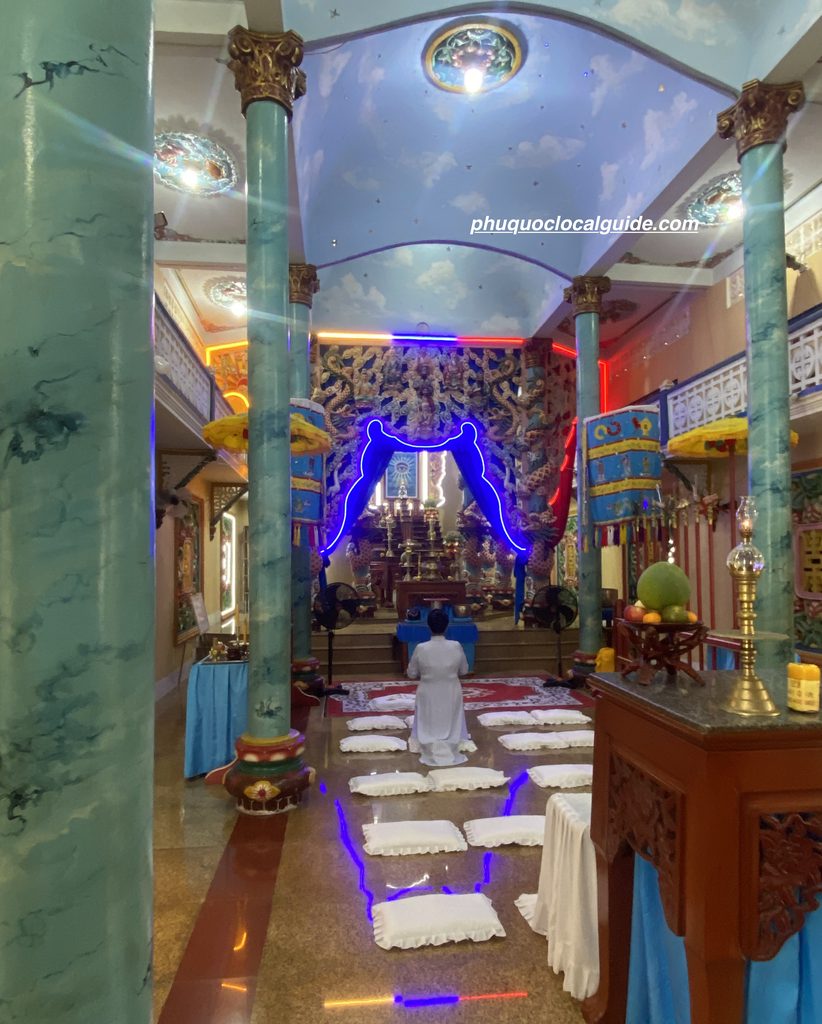
If your schedule happens to coincide with one of these ceremonies, you’ll experience the temple in its most authentic setting. Visitors are welcome to observe respectfully from designated areas.
Tips for Visiting
Since this is an active place of worship, respectful behavior is appreciated.
When visiting, remember to:
- Wear modest clothing that covers shoulders and knees.
- Speak quietly inside the prayer hall.
- Avoid interrupting ceremonies.
- Ask permission before taking photographs inside the temple.
- Remove hats when entering the main worship area if requested.
Following these simple customs helps preserve the peaceful atmosphere for everyone.
Combine It with a Walking Tour of Old Duong Dong
Because everything is within walking distance, the temple fits perfectly into a cultural walking route through the town.
A recommended itinerary could include:
- Bach Dang Riverside Park
- Dinh Ba Thuy Long Thanh Mau
- Duong Dong Cao Dai Temple
- Sung Hung Pagoda
- Duong Dong Market
- Nguyen Trung Truc Bridge
- Sunset at Dinh Cau
- Dinner at the Phu Quoc Night Market
This route introduces visitors to a side of Duong Dong that goes far beyond beaches and seafood restaurants.
A Different Way to Experience Phu Quoc
Modern Phu Quoc is famous for luxury resorts, island-hopping tours, cable cars, and white-sand beaches. But the island’s identity has also been shaped by generations of communities who brought their beliefs, traditions, and cultures here.
The Duong Dong Cao Dai Temple quietly preserves one part of that story. It may never become one of the island’s busiest tourist attractions—and perhaps that’s exactly what makes it special.
For travelers who enjoy discovering authentic local culture, wandering beyond the usual attractions, and understanding the people who call Phu Quoc home, this colorful temple offers an experience that is every bit as memorable as the island’s famous beaches.
Leave a Reply