Most visitors know Duong Dong for its lively night market, seafood restaurants, and famous sunset views. But beneath the energy of Phu Quoc’s busiest town lies another story that many travelers never notice.
Within just a few kilometers, Buddhist temples, village communal houses, folk shrines, and a Cao Dai temple stand peacefully alongside one another. Rather than competing, these different beliefs have naturally become part of everyday life.
On any given day, local people may visit a Buddhist temple, light incense at a sea goddess shrine, attend a Cao Dai ceremony, or simply show respect for traditions that are different from their own. This quiet harmony has shaped Duong Dong for generations and reflects the diverse communities that helped build modern Phu Quoc.
If you slow down and spend a morning walking through the town center, you’ll discover a fascinating cultural journey that most tourists completely miss.
1. Sung Hung Pagoda – The Oldest Buddhist Temple on Phu Quoc
The morning in Duong Dong often begins with the gentle sound of temple bells from Sung Hung Pagoda, one of the oldest Buddhist temples on the island. Built in the early 20th century, the pagoda has long been a place where local families come to pray, meditate, and celebrate important Buddhist festivals.
Although it sits near the heart of town, the atmosphere feels remarkably peaceful. Large shade trees, traditional architecture, Buddha statues, and quiet courtyards create a welcome contrast to the busy streets outside.
For visitors, Sung Hung Pagoda offers not only beautiful architecture but also a glimpse into the spiritual rhythm of everyday island life.
2. Dinh Ba Thuy Long Thanh Mau – The Sea Goddess Who Protects the Island
Only a short walk from Sung Hung Pagoda stands Dinh Ba Thuy Long Thanh Mau, one of the island’s most important folk shrines. According to local belief, Thuy Long Thanh Mau is the guardian of the sea, protecting fishermen, sailors, and everyone whose lives depend on the ocean.
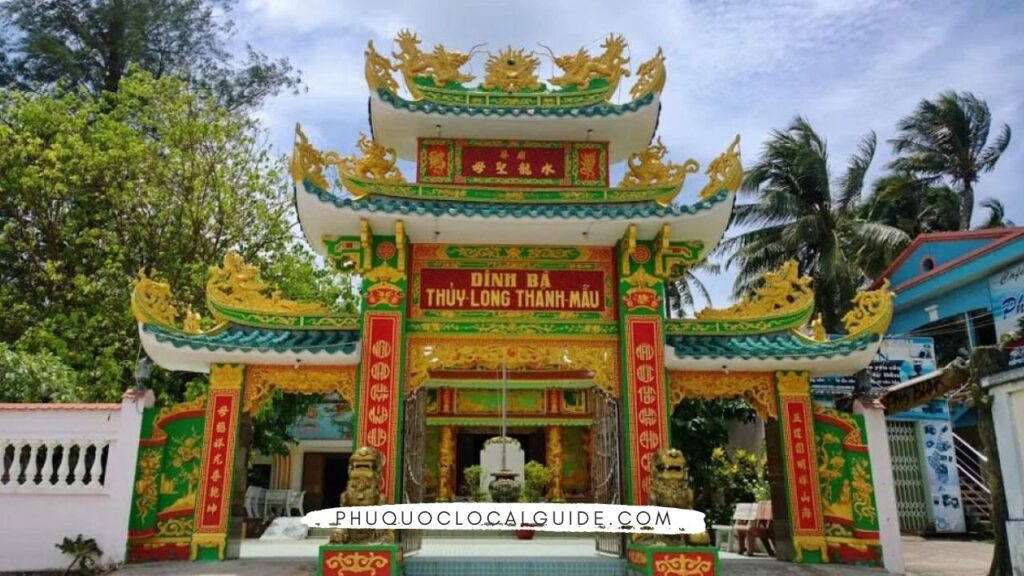
During important festivals and special occasions, local families come here to offer incense and pray for calm seas, safety, and good fortune.
Unlike many famous tourist attractions, Dinh Ba remains primarily a place of worship. Visiting respectfully offers a deeper understanding of the relationship between the people of Phu Quoc and the sea that has sustained them for centuries.
3. Cao Dai Temple – A Quiet Corner Filled with Color
Walking along Nguyen Trai Street, you’ll eventually notice one of the town’s most distinctive religious buildings. The Duong Dong Cao Dai Temple immediately stands out with its colorful façade, elegant symmetry, and the famous Divine Eye symbol watching over the entrance.
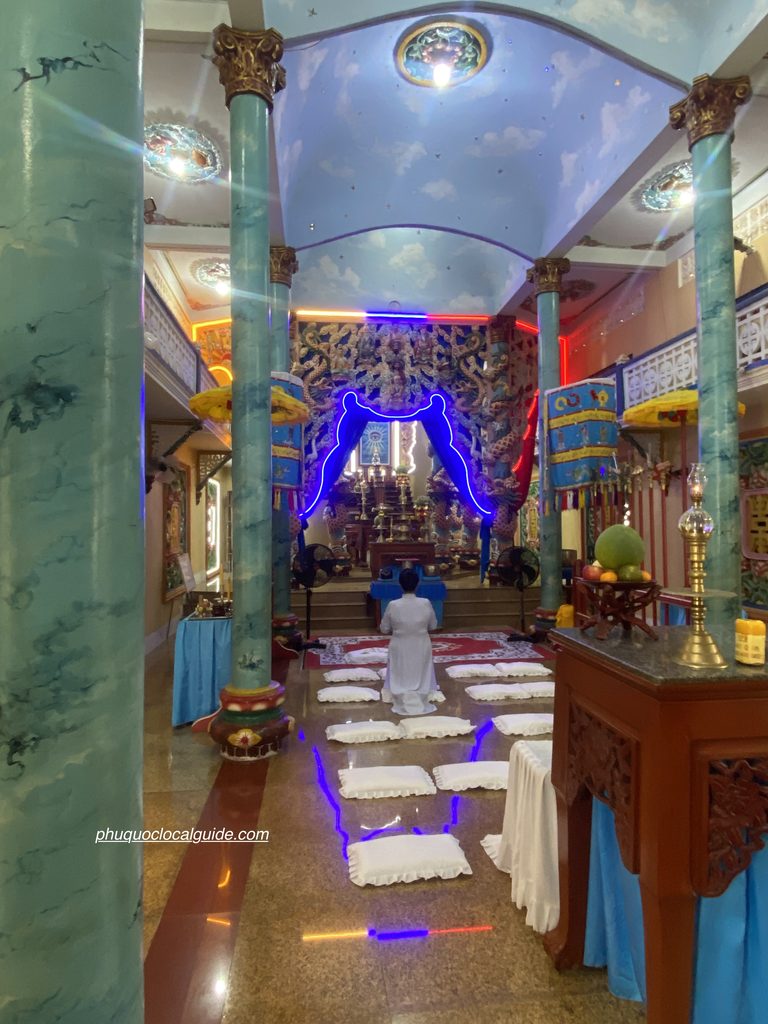
Step inside and the atmosphere changes completely. The noise of traffic fades away, replaced by a calm and peaceful prayer hall.
For travelers interested in architecture or Vietnamese religions, this temple offers an opportunity to learn about Cao Dai, a uniquely Vietnamese faith that combines elements of Buddhism, Taoism, Confucianism, Christianity, and other spiritual traditions.
Many visitors pass by without realizing that one of Phu Quoc’s most fascinating religious sites sits quietly in the middle of town.
4. Dinh Than Duong Dong – A Connection to the Island’s First Villages
Hidden away from the main tourist routes, Dinh Than Duong Dong preserves the traditions of the island’s early settlers. Village communal houses have long served as the cultural heart of Vietnamese communities, where important ceremonies, festivals, and gatherings take place.
Although modest in appearance, the communal house reflects the history of Duong Dong long before tourism transformed the island. Visitors interested in local heritage will appreciate this peaceful stop, where the story of the island’s earliest communities continues to be remembered.
5. Dinh Cau – More Than Phu Quoc’s Most Famous Sunset Spot
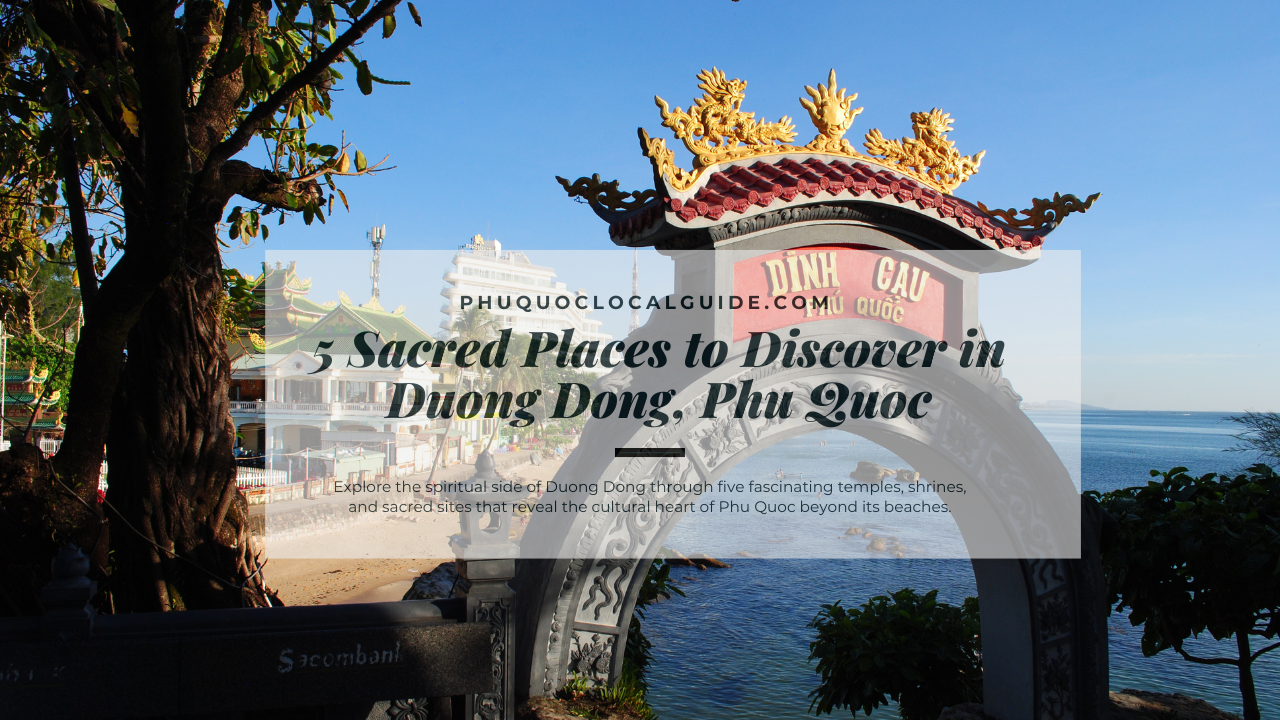
No visit to Duong Dong feels complete without seeing Dinh Cau. Most travelers come here for the spectacular sunsets, but few realize that this small shrine has been an important spiritual landmark for generations of fishermen.
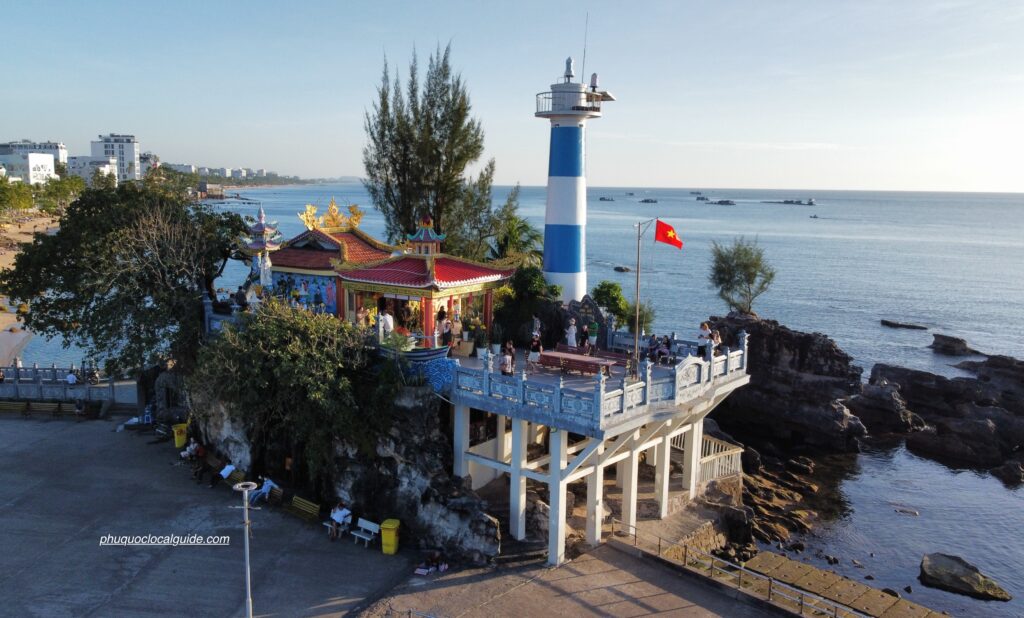
Perched on a rocky headland overlooking the sea, Dinh Cau has long been a place where local fishermen pray for safe voyages before heading offshore.
As evening approaches, something special happens. Local residents, worshippers, photographers, and travelers all gather together to watch the sun disappear into the Gulf of Thailand. The small shrine silhouetted against the glowing sky has become one of the defining images of Phu Quoc. It is a place where faith, tradition, and natural beauty meet every single day.
Why These Five Places Matter
What makes Duong Dong unique is not simply the existence of these religious landmarks, but how naturally they fit into everyday life.
Within a short walking distance, you’ll encounter:
- an ancient Buddhist pagoda
- a shrine dedicated to the sea goddess
- a colorful Cao Dai temple
- a traditional village communal house
- a historic fishermen’s shrine overlooking the sea
Together, they tell the story of how different communities, beliefs, and cultures have lived side by side while shaping the identity of Phu Quoc.
Rather than standing apart as isolated monuments, these places remain active parts of local life. They continue to host ceremonies, welcome worshippers, and preserve traditions that have been passed down through generations.
Discover the Cultural Heart of Phu Quoc
If you want to understand Phu Quoc beyond its beaches and luxury resorts, spend a slow morning walking through the streets of Duong Dong. You don’t need a strict itinerary. Simply wander from one sacred place to another, stop for a Vietnamese coffee, watch local life unfold, and take time to appreciate the quiet stories hidden behind the town’s busy streets.
By the end of the walk, you’ll likely realize that Duong Dong is more than the commercial center of Phu Quoc. It is also the island’s cultural heart—a place where history, faith, and community continue to live together, just as they have for generations.
Leave a Reply